
Baccarat Dragon Bonus House Edge: The Brutal Math Behind the Side Bet
The Dragon Bonus side bet carries a house edge that swings from roughly 2.7% on the Player side to a punishing 10.6% on the Banker side — and that asymmetry alone should tell you everything about how this wager is engineered. I have torn apart thousands of shoe logs, and the pattern never breaks: the payout structure looks generous at 1:1 and 30:1, but the natural-win clause quietly guts your expected value. 🐉
Here is the mechanical truth. Dragon Bonus pays a flat 1:1 on any natural win, meaning an 8 or 9 dealt on the first two cards. Any non-natural win pays according to margin: 1:1 for a four-point spread, 2:1 for five, 4:1 for six, 6:1 for seven, 10:1 for eight, and 30:1 for a nine-point margin. Sounds rich, right? It is not. The probability of hitting that 30:1 nine-point margin sits at a razor-thin 0.28%, and the combined probability mass of all the juicy margin payouts barely clears 4%. The bulk of your returns comes from a flat 1:1 that the house already has an edge on.
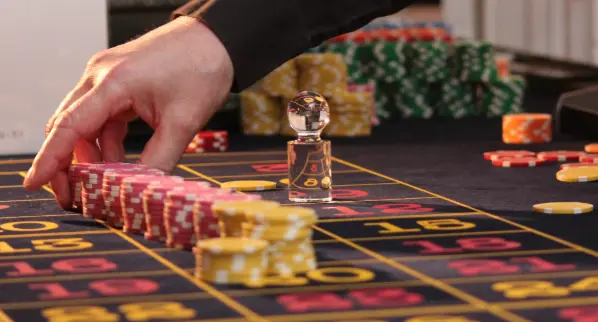
Baccarat Side Bet Comparison: Where Dragon Bonus Ranks
Run the numbers against Pair bets and you start to see the hierarchy. The Player Pair and Banker Pair each carry a house edge around 10.4% to 11.3% depending on the table rules and commission structure. Dragon Bonus on the Banker side lands in the same graveyard — 10.6%. But the Player Dragon Bonus at 2.7% is genuinely one of the leaner side wagers on the felt. That 2.7% figure makes it competitive with a decent blackjack hand, and it is the only reason any sharp player gives this bet a second look. 🎯
The killer detail most players miss is the commission interaction. On a commission-free or reduced-commission table, the Banker Dragon Bonus edge can compress marginally, but the natural-win clause still acts as a tax. Every time a natural 8 or 9 lands, you get 1:1 instead of the margin payout your spread deserved. Over a 500-hand session, that clause alone strips a measurable chunk off your theoretical return.

The Baccarat Dragon Bonus House Edge Deconstructed
Let me break the expected value apart with cold precision. The Baccarat Dragon Bonus House Edge is not a single number — it is a distribution. You are effectively buying a lottery ticket on extreme margins while the base game grinds you down at 1:1. The variance is savage: long dry spells are the norm because the 30:1 and 10:1 outcomes cluster in rare, unpredictable bursts. Bankroll swings of 50 to 100 units happen without a single Dragon Bonus trigger.
Now stack this against the Baccarat Side Bet Comparison landscape. Egalite bets run edges north of 14% on some pay tables. Perfect Pairs can exceed 12% depending on the pay table variant. Dragon Bonus Player at 2.7% is the outlier — the one wager where the house edge does not make me physically wince. But here is the trap: most tables only offer Dragon Bonus on the Banker side, where the 10.6% edge makes it a pure donation. Always confirm which side the bet is attached to before you touch a chip. 💰
Algorithmic Reality and the Margin Trap
The payout table is a psychological weapon. The 30:1 on a nine-point margin creates an illusion of deep value, but the actual hit frequency of 0.28% means you need roughly 357 hands on average to see one. Meanwhile, the flat 1:1 on naturals means your bankroll bleeds quietly on the most common winning outcomes. That is not a bug in the design — it is the entire point of the design. The house is selling you a dream on the tail while collecting a tax on the body of the distribution.
My hard rule after auditing this bet across dozens of shoe configurations: only touch Dragon Bonus when it is attached to the Player side and you are on a table with a confirmed 2.7% edge. Anything else — the Banker version, the commission-free variants, the mixed-pay tables — is a bankroll incinerator dressed in a dragon costume. The math does not negotiate, and the natural-win clause never blinks. 🔥