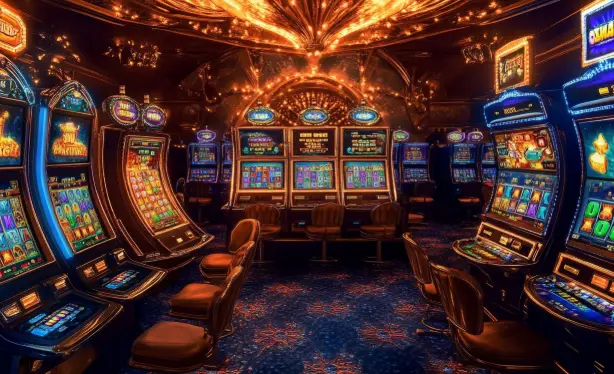
Casino Surveillance Camera Blind Spot Maps: The Structural Navigation Nobody Wants You to See
Every pit boss will tell you the eye in the sky never blinks. That is a lie sold to tourists and rookie dealers. The truth is that camera coverage on any gaming floor is a patchwork of dead angles, occluded sightlines, and structural compromises baked into the building long before the first chip ever hit the felt. Understanding Casino Surveillance Camera Blind Spot Maps is not about cheating — it is about reading the architecture of control itself. And the architecture always has holes.
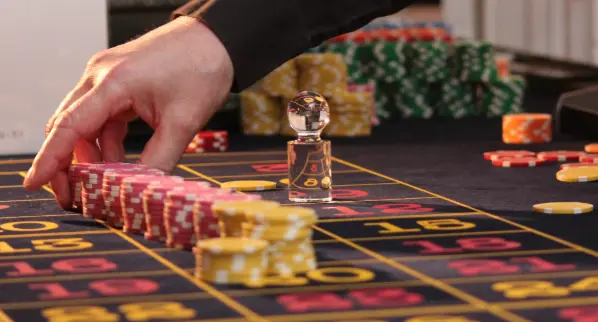
Table Layout Structural Navigation and the Geometry of Coverage
Walk into any major casino and look up. Those domes and pendants are not placed randomly. They follow a rigid logic tied to Table Layout Structural Navigation — the way pit geometry, cage placement, and aisle width dictate where a lens can actually see versus where it merely pretends to. A camera mounted above a blackjack table at a 42-degree tilt cannot capture the chip tray AND the player's hand simultaneously. That is not a flaw. It is a deliberate trade-off made by surveillance directors who know exactly what they are sacrificing.
The blind spots emerge in three predictable zones: the near-side dealer elbow, the far-side player stack, and the transition corridor between pit sections. These are not accidents. They are structural constants. 😏

Hardware Limitations and the Myth of Full Coverage
Most floors run a mix of 4K PTZ units and legacy fixed domes. The fixed domes are the problem. A 2.8mm lens at 20 feet gives you roughly a 90-degree horizontal field — subtract the housing cut and you are down to 78 degrees of usable capture. Multiply that across a 12-table pit and the math produces gaps. Real gaps. Not theoretical ones. The Casino Surveillance Camera Blind Spot Maps that circulate among advantage players and floor staff are built from exactly this arithmetic.
Thermal units and LiDAR overlays are changing the game at the high-end properties, but mid-tier and riverboat casinos are still running hardware from 2016. Those systems have blind spots you could park a car in.
Algorithmic Gaps in Motion Tracking
Modern surveillance software uses predictive path modeling. It tracks a subject's velocity and projects where they will be in 1.5 seconds. That predictive window is the vulnerability. Move in a non-linear pattern — stop, reverse, change gait — and the algorithm loses lock for 8 to 14 frames. That is enough time to execute a chip switch or a card muck that never registers on the recorded feed.
This is not conspiracy theory. This is documented system behavior. The Table Layout Structural Navigation of any pit creates natural choke points where multiple subjects cross paths, forcing the tracking algorithm to choose a primary target. It always chooses wrong at least once per hour. Always. 🎯
Mapping the Dead Zones: A Practical Breakdown
Here is what the maps actually show. Zone one: the dealer's left shoulder at any table with a drop box mounted on the player side. Zone two: the floor supervisor podium when three or more players crowd the rail. Zone three: the cashier cage intake window during shift change. Zone four: any table within 6 feet of a structural column. These are the permanent blind spots — the ones that never get fixed because fixing them costs more than the theoretical loss.
The temporary blind spots are worse. A cocktail server standing at the rail blocks a camera for 40 to 90 seconds. A pit boss leaning over to check a shoe creates a 15-second occlusion. Stack four of those in a 10-minute window and you have a cumulative gap of nearly six minutes of unmonitored table action.
Why the Maps Stay Underground
Casino operators know these gaps exist. They audit them quarterly. But publishing a blind spot map would be an admission that the surveillance system is not omnipotent — and that admission carries legal weight in disputes over cheating claims and liability. So the maps stay in the hands of surveillance directors, a handful of advantage players, and the engineers who install the hardware. 🃏
The next time you sit at a table, look up. Count the lenses. Then count the angles they cannot possibly cover. The difference is the map you will never see — but it is there, and it is precise.